The Py Doctrine
Pylagonic Thought, or Py, is a philosophy of orientation. It begins from a simple proposition:
Reality is structured, interconnected and partially unknowable.
Pylagon is derived from the Greek pylē (gate, passage or threshold) and agōn (struggle, contest or striving), expressing the doctrine’s understanding that clarity emerges through continual engagement with reality rather than certainty alone.
Py is neither a religion nor a science, but a philosophy that seeks to orient us within reality through clarity, coherence and intellectual humility.
Rather than prescribing what to believe, Py offers a way of approaching experience through awareness, recognition of patterns, understanding of relationships, honest questioning and acceptance that some aspects of reality will always remain beyond comprehension.

Chat with Py
You can discuss Py in live chat (icon on the bottom right).
The Doctrine
Part philosophy, part practical framework, The Py Doctrine explores a new approach to understanding reality and the human condition. Through the geometry of the Pylagon and its five Cornerstones, it presents a way of thinking that is intellectually grounded, open-ended and designed to be lived rather than merely believed.
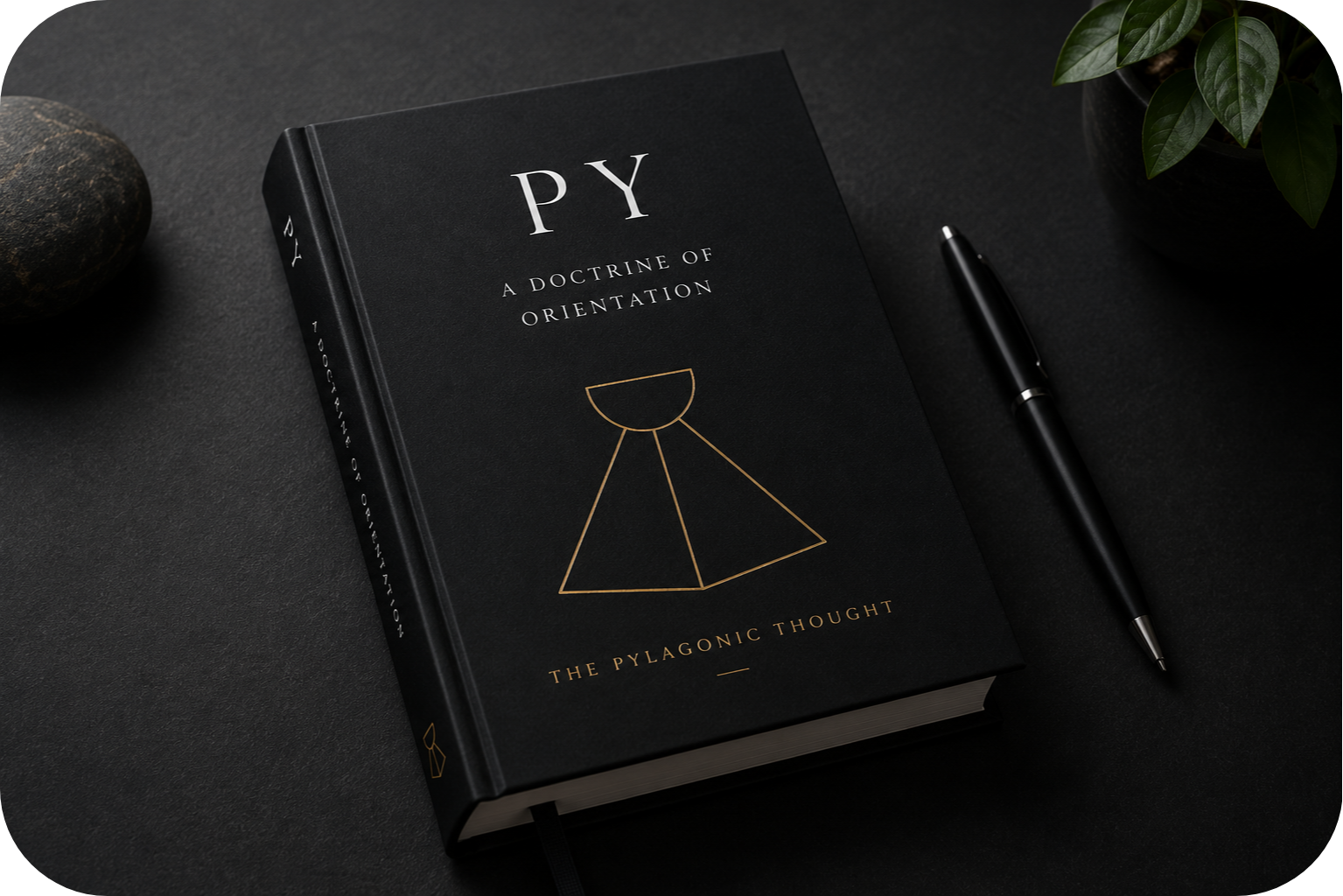
The complete doctrine will be released soon.
The Cornerstones
Py is built upon five segments:
Consciousness: The capacity for awareness. Every experience begins with consciousness, for nothing can be known without first being experienced.
Pattern: The recognition of order, relationship and recurring structure within reality. Pattern allows the world to become intelligible rather than chaotic.
Unity: The understanding that nothing exists in complete isolation. Every person, object and event exists within a wider network of relationships.
Inquiry: The continual practice of questioning assumptions, examining beliefs and remaining open to revision as understanding develops.
Mystery: The recognition that reality always exceeds complete explanation. Mystery is not ignorance, but humility before the limits of what can be known.
Together, the Cornerstones provide a framework for understanding both the world and our place within it.
The Pylagon
The Pylagon is the central symbol of Py. Its five segments represent the Cornerstones of Py.
Read together, they form a single structure of orientation, providing a way to approach experience, examine questions and navigate reality with greater clarity.
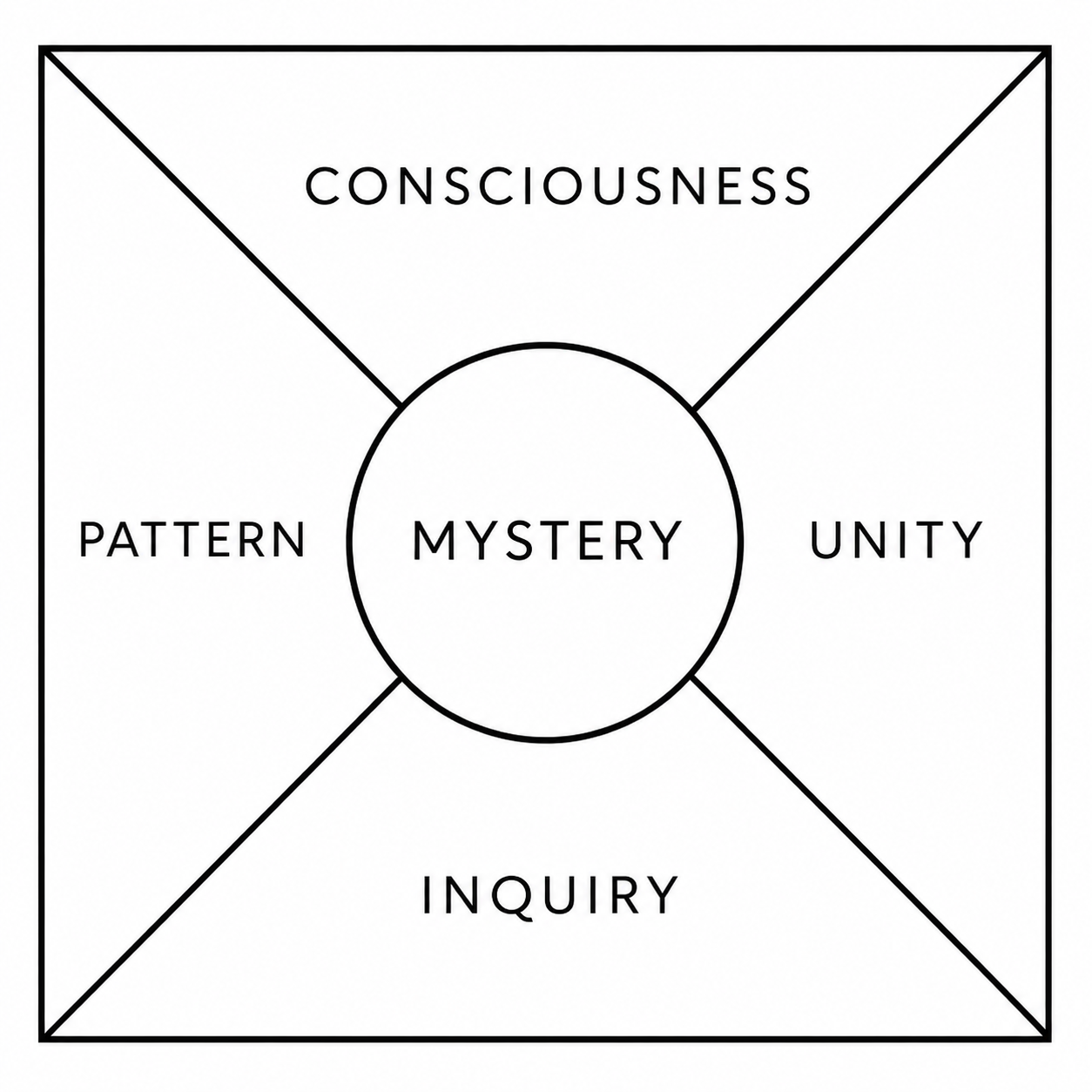
Rather than seeking immediate answers, Py approaches every meaningful question through the five Cornerstones, allowing each to illuminate a different aspect before understanding is formed.
Connect with Py
We share content across various social media platforms, exploring the ideas of Py and the practical tools developed to help people navigate existence with greater clarity.